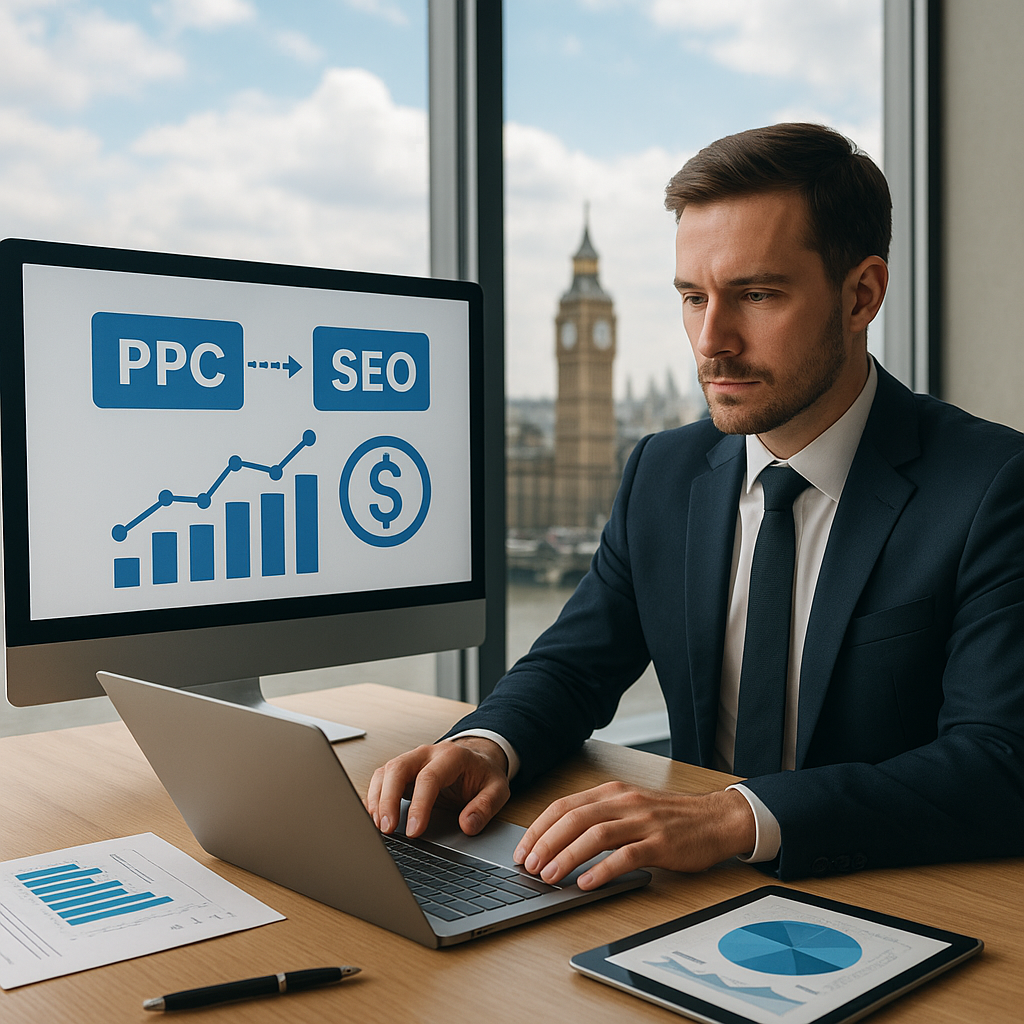
Combining PPC and SEO strategies can unlock unprecedented growth for businesses targeting London’s vibrant market. By aligning paid advertising efforts with organic search optimization, brands can maximize their ROI, capture high-intent audiences, and stay ahead of fierce competition. This article explores proven techniques to harmonize these channels, offering actionable insights for London-based marketers and agencies seeking to dominate local search results.
Understanding the Synergy Between PPC and SEO
While PPC and SEO often operate in parallel, integrating them creates a multiplier effect. SEO builds long-term authority through quality content and link building, whereas PPC delivers instant visibility via targeted ads. When combined, they:
- Reinforce brand presence on search engine results pages (SERPs).
- Enable data sharing on keywords and audience behavior.
- Accelerate lead generation and nurture prospects across the funnel.
For London businesses, this synergy is critical. Local searches exhibit high commercial intent, and the dense urban marketplace demands a strategic edge. By leveraging PPC insights, SEO professionals can refine their organic campaigns, while PPC managers gain from organic trust signals that improve Quality Score and reduce bid strategy costs.
Conducting Comprehensive Keyword Research
Effective integration begins with deep keyword analysis. Traditional SEO and PPC teams should collaborate to identify high-value search terms, focusing on:
- Local modifiers: terms like “near me”, “in London”, specific borough names.
- Commercial intent keywords: “buy”, “hire”, “book”, “consultation”.
- Long-tail phrases: niche queries reflecting purchase readiness.
Leveraging PPC Data for Organic Gains
Monitor PPC performance metrics—click-through rate (CTR), conversion rate, cost per acquisition (CPA)—to highlight top-performing keywords. Those with strong conversion signals deserve priority in SEO content strategies. Use tools like Google Ads Keyword Planner and Search Console to cross-reference search volume and competition levels, ensuring that your organic efforts focus on terms that drive real business results.
Refining PPC Campaigns with SEO Insights
Analyze organic traffic patterns to uncover rising trends and seasonal demand in London’s market. Incorporate these insights into your PPC campaigns by adjusting bids on emerging keywords before competitors react. Additionally, SEO-driven landing pages can be repurposed for PPC, boosting Quality Score and reducing average CPC.
Optimizing Landing Pages for Maximum Conversions
Landing page quality is the bridge between visitor interest and business growth. Whether through paid ads or organic clicks, a well-optimized page improves conversion rates and elevates both channels:
- Use dynamic headlines and localized messaging (e.g., “Expert SEO Services in Shoreditch”).
- Ensure mobile responsiveness and lightning-fast load times.
- Implement clear calls-to-action (CTAs) that align with user intent.
Unified Content Strategy
Align PPC ad copy with on-page SEO elements: title tags, meta descriptions, headers, and body text. Consistency reassures users and search engines that they’ve arrived at a relevant destination. A strong hybrid approach might include informative blog posts optimized for organic visibility, paired with retargeting ads that promote lead magnets like case studies or free consultations.
A/B Testing for Continuous Improvement
Run A/B tests on headlines, CTAs, images, and form placements. Use Google Optimize or third-party platforms to split-test variants across both PPC and organic entry points. The goal is to identify the highest-performing combinations that consistently deliver conversion uplift. Share results across teams to refine messaging in ad copy and on-page content alike.
Budget Allocation and ROI Measurement
Effective budget management is crucial to ensure every pound spent generates meaningful returns. A unified dashboard tracking both PPC and SEO metrics can reveal underperforming areas and opportunities for reallocation:
- Track assisted conversions: organic visits that influence PPC-driven sales.
- Monitor keyword-level ROI to decide where to increase bids or invest in content creation.
- Allocate budget flexibly based on real-time performance data.
Unified Reporting Framework
Integrate Google Analytics, Ads, and Search Console data through tools like Data Studio or specialized SEO platforms. Create custom reports highlighting:
- Overall ROI by channel and campaign.
- Cost per lead attributed to combined SEO and PPC efforts.
- Time-to-conversion metrics for organic-first vs. paid-first users.
This holistic approach ensures you can justify investments, optimize spend, and demonstrate to stakeholders how integrated strategies lower acquisition costs while boosting revenue.
Leveraging Local SEO Tactics in London’s Competitive Landscape
Local search optimization is a game-changer for businesses operating in London’s hyper-competitive neighborhoods. By weaving local SEO into your combined strategy, you can capture ready-to-buy audiences at every touchpoint:
- Claim and optimize your Google Business Profile (GBP) with accurate NAP (Name, Address, Phone).
- Gather and respond to customer reviews on GBP and relevant directories.
- Use localized schema markup to help search engines understand your service areas.
Geo-Targeted PPC Campaigns
Set up location bid adjustments in Google Ads to increase visibility in high-value postcodes like SW1, EC1, or W1. Pair these efforts with localized landing pages that detail service availability, special offers, and testimonials from neighbors in specific London boroughs. This dual approach boosts relevance scores and drives down average CPC.
Hyperlocal Content Development
Create blog posts, case studies, and resource guides focused on London-specific topics—e.g., “SEO Tips for Shoreditch Startups” or “PPC Best Practices for Chelsea Boutiques.” Promote these assets through paid social ads targeting local business owners or residents interested in your services. The social signals and backlinks generated will further elevate organic rankings.
Advanced Analytics and Continuous Optimization
Data-driven decision-making lies at the heart of maximizing ROI. Use advanced analytics to track user journeys across channels and identify friction points:
- Set up custom events and goals in Google Analytics to measure micro-conversions.
- Implement heatmaps and session recordings to understand user behavior on landing pages.
- Leverage CRM integration to trace lead quality and lifetime customer value back to both PPC clicks and SEO visits.
Attribution Modeling
Move beyond last-click attribution. Test data-driven and position-based models to understand how early organic touchpoints assist in later paid conversions and vice versa. Armed with these insights, you can recalibrate budgets, bids, and content priorities for sustained growth.
Machine Learning and Automation
Take advantage of Google’s automated bidding strategies—Target CPA, Target ROAS, Maximize Conversions—infused with first-party SEO data. Use marketing automation platforms to trigger email sequences or retargeting ads based on organic behavior, ensuring that prospective customers receive the right message at the right time.
Building Collaborative Teamwork
The key to a successful PPC and SEO partnership is cross-functional collaboration. Encourage an integrated workflow by:
- Hosting regular strategy sessions where both teams review metrics and plan joint initiatives.
- Creating shared documentation of keyword lists, content calendars, and campaign roadmaps.
- Establishing common performance goals that reward cooperation over siloed achievements.
When audience data, creative assets, and technical expertise flow freely between PPC and SEO specialists, the result is a cohesive online presence that outperforms isolated efforts.
Conclusion
Integrating PPC and SEO for maximum ROI in London requires meticulous planning, continuous data sharing, and a unified vision. By leveraging combined analytics, executing hyperlocal tactics, and fostering cross-team collaboration, businesses can dominate both paid and organic channels. In a city as dynamic and competitive as London, a holistic approach not only drives immediate results but also lays the foundation for sustained growth in one of the world’s most demanding markets.