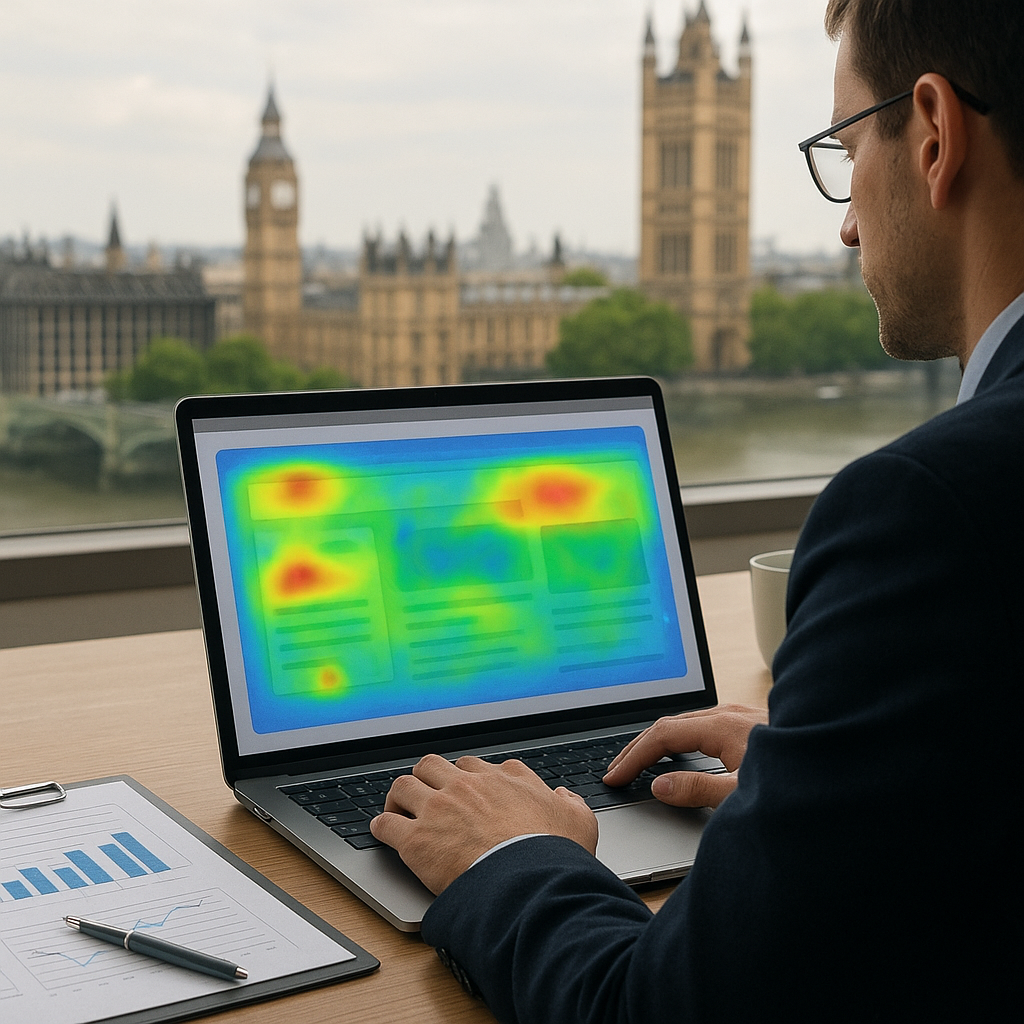
Leveraging heatmaps in SEO strategies can transform how London-based businesses understand website engagement and optimize for both search engines and user satisfaction. By visualizing where visitors click, scroll, and hover, SEO experts can uncover hidden opportunities to boost conversions, improve dwell time, and fine-tune landing pages. Integrating these insights with traditional analytics yields a comprehensive picture of performance, allowing digital marketers to craft tailored experiences for the diverse London audience.
Understanding Heatmaps and User Behavior
Heatmaps are powerful tools in the arsenal of any London SEO specialist, providing a form of data visualization that reveals patterns of interaction at a glance. Instead of relying solely on click counts or scroll-depth percentages, heatmaps overlay color-coded feedback directly onto page layouts. Regions with intense activity glow red, moderate engagement shows up in yellow, and neglect appears in cool blue hues. This format helps pinpoint which elements capture attention and which are being overlooked.
Types of Heatmaps
- Click Heatmaps track where visitors tap or click, highlighting links, buttons, and interactive media.
- Scroll Heatmaps display the furthest depth users scroll on each page, uncovering content drop-off points.
- Move Heatmaps follow mouse trajectories, suggesting where eyes may drift—particularly valuable on desktop.
Understanding these variations allows SEO professionals to choose the right approach for goals such as boosting click-through rate (CTR) on key calls to action or ensuring critical information remains visible above the fold.
Implementing Heatmap Tools for London Websites
Selecting and integrating a heatmap platform requires careful planning. Popular solutions like Hotjar, Crazy Egg, Mouseflow, and Lucky Orange offer different feature sets—session recordings, form analytics, or funnel tracking. Follow these steps to get started:
- Choose a tool that aligns with your budget and feature needs. For extensive UX testing, Mouseflow’s session replay is invaluable, while Crazy Egg excels at simple click maps.
- Embed the tracking snippet within your site’s header or use a tag manager. Ensure the script loads asynchronously to avoid slowing down page rendering.
- Define relevant pages for heatmap activation—homepage, top landing pages, and high-exit pages. Prioritize URLs where London traffic is concentrated, such as location-specific service pages.
- Configure event triggers if you want to capture interactions on dynamically loaded elements like pop-ups or AJAX-based menus.
- Set a sufficient sample size. Aim to gather at least a few thousand interactions per page to ensure statistical significance, especially for high-traffic areas of your London-centric domain.
With the tracking active, data will begin streaming in, ready to be sliced by device type, landing source, or campaign tag, allowing for granular insights into how different visitor segments behave.
Analyzing Data and Integrating with SEO Strategies
Heatmap analysis goes beyond identifying hot and cold zones; it informs strategic decisions to refine on-page optimization, content hierarchy, and conversion funnels. Combine heatmap insights with metrics from Google Analytics—bounce rate, session duration, and organic landing page performance—to validate hypotheses and prioritize fixes.
- Spot neglected CTAs. If a prominent button shows little interaction, consider revising its copy, color contrast, or positioning closer to user scrolling patterns.
- Detect “dead zones.” Large portions of page real estate ignored by users indicate content that fails to engage. Replace static banners with interactive elements or concise value propositions.
- Evaluate above-the-fold placement. Scroll heatmaps reveal whether crucial headlines or subscription forms are missed entirely. Shift persuasive elements higher on the page to capture attention instantly.
- Correlate drop-off points. On long-form content or FAQ pages, identify where scroll behavior dips dramatically. Insert jump links, anchor menus, or multimedia to maintain momentum and reduce bounce rates.
Prioritizing these adjustments can lead to improvements in conversion rate optimization (CRO) and enhance overall engagement metrics—factors that search engines increasingly consider when ranking local results for queries like “SEO agency London” or “digital marketing consultants London.”
Advanced Techniques: A/B Testing and Segmentation
Once initial heatmap-driven optimizations are implemented, it’s time to layer in A/B testing to verify their impact. Split traffic between the original page (Control) and the modified version (Variant) to measure changes in key performance indicators. Use heatmaps on both variants to ensure that wins in click activity translate into genuine user satisfaction rather than accidental misclicks.
Segmenting by Device and Source
- Desktop vs. Mobile: Mobile heatmaps often reveal thumb-driven interaction patterns distinct from cursor movement on desktop. Ensure tap targets are adequately sized and spaced.
- Organic vs. Paid Traffic: Visitors arriving via PPC campaigns may interact differently than those from organic search. Tailor landing page messaging accordingly.
- Local London Segments: Create heatmaps for visitors filtered to specific boroughs or neighborhoods using UTM parameters or Geo-targeted tagging in your analytics platform. This granularity helps craft hyper-local experiences.
Advanced segmentation empowers London SEO experts to refine content strategies for diverse audience clusters—tourists browsing restaurant guides, locals seeking professional services, or businesses exploring B2B partnerships.
Local London Considerations for SEO and Engagement
When optimizing heatmap-driven insights for a London audience, cultural and behavioral nuances play a crucial role. The city’s digital consumers often seek swift, clear answers amid a busy lifestyle. Incorporate these local factors:
- Mobile First: With high commuter traffic, prioritize mobile optimization—ensure pages load quickly on 4G or 5G, minimize pop-up invasions, and place contact details above the scroll fold.
- Local Schema Markup: Combine heatmap insights with structured data to boost visibility for “near me” searches. Highlight opening hours, London postcode, and customer reviews in rich snippets.
- Event-Based Content: Londoners respond to timely events—West End shows, sporting fixtures, festivals. Use heatmaps to test seasonal banners or countdown timers for maximum impact.
- Multilingual Pages: Heatmaps on English and non-English versions of your site can reveal preferences of international visitors to London. Tweak navigation labels and imagery accordingly.
By marrying heatmap findings with local SEO best practices, London-based businesses can stand out in a competitive market, delivering tailored experiences that resonate with both residents and visitors.